Showing posts with label Sleeping Beauty. Show all posts

Friday, February 12, 2016

Spindle as Sleight-of-Hand: A Book Review

The Sleeper and the Spindle by Neil Gaiman


This is my second attempt at reading Neil Gaiman's work.  I started, got half-way through, and then sort of trickled off from reading Stardust.  I got a bit further with the movie version but with ultimately the same fate.

I mention this in full disclosure, in case my first impression unfairly colored the second.

I'm fascinated with spinning, so one look at the title of this book and I had to read it.  I was also drawn by the atmospheric black, white, and gold illustrations, drawing tangents with alchemy.  Though Chris Riddell's style is less "pretty" than I (personally) like, its quiet irreverence goes well with the sardonic narration, and its intricacy reflects the tangles of thorns, thickets, and themes of the source fairy tales.

In brief summary, a sort of Snow White, now queen, is reported to by three of her dwarfs.  A sleeping sickness is spreading throughout the next door kingdom.  She decides she must go, leaving on the eve of her marriage donning armor and sword rather than a wedding gown.  The dwarfs lead her under the mountain ranges that no one can climb over, to the cursed kingdom, where they are advanced upon by zombie-like sleepers, until they reach the thorn-covered castle.  The queen burns the roses and thorns, they ascend the highest tower, find a cranky old woman and a beautiful sleeper.  The queen (Snow White) knows what to do . . . but when the kissed sleeper wakes, it turns out she was the witch, who used the spindle (no spinning wheel in this version) to steal the life and sleep from the princess, now aged and senile, and from the surrounding kingdom.  The queen refuses the offer to work for the beautiful witch, gives the spindle back to the old princess; the old princess stabs the youthful witch, undoing the sleeping spell on all the land, but not restoring the lost youth of herself.  Rather than returning home to the inevitable wedding, the queen and her dwarfs turn away toward unknown lands and further adventures.

I was intrigued by several elements in the story, such as the nature of the spell over the sleeping civilians, who appeared to speak out loud the slumbering princess's dreams; the impassibility of the mountain range; the fact that only the spiders were un-sleeping (later rendered less mysterious by the mention of moths and maggots); that the spindle alone was the culprit of enchantment; the Snow White and the Huntsman type heroine, who makes me curious to know the version of her own tale.

Despite its potential--namely, its expert selection of fairy tale archetypes--The Sleeper and the Spindle lacks impact.  The telling is bland and slow; the narrator's asides feel forced; motivations were obscure, yet somehow it lacked mystery.  

Then there is this irksome plot hole: why is the old princess able to kill the youthful witch at the end but not before then?  We are told that the witch's spell prevented her from harm, but how has it suddenly stopped working?  Even the witch seems confused by this, muttering, "It was only a scratch," as she crumbles to ashes.

Another plot hole: why wasn't the princess's youth returned along with her people's wakefulness?  These things are not explained, and not in the what-did-Bluebeard's-first-wife-do-to-get-killed kind of way.

I knew the sleeping beauty and the old woman were reversed roles, probably because I expected this sort of plot twist from the outset.  The woman-rescuing-woman element has grown trite, becoming the kind of thing one expects from a post-modernist fairy story.  At the end, I felt cheated: what interested in this story was mere sleight-of-hand, distracting from the fact that there really wasn't much happening.

There was a moment of fairy tale maturity, like a strong, high note in the story, when the queen withstands "temptation" to serve the young and beautiful witch because she has "learned to feel her own feelings."  When did that happen?  And how?  Wouldn't it have been so much more powerful to express that tangibly, rather than in narration, in some visible sign, some outward rejection manifesting itself physically in reality?  What experience in the original story caused this revelation?

I want to read that story.

The Sleeper and the Spindle gives the impression of trying a bit too hard; and in the end, though it is entertaining, it is neither very new nor captivating.

fleur2

Thursday, June 12, 2014

Bored to Death

A Review of Disney's Maleficent


The first thing I do after watching a movie is to head over to Rotten Tomatoes to peruse the film reviews by proper critics.  The second thing I do, if it is a fairy tale movie, is to hit up all my fairy tale blog peeps for a more balanced perspective.  Sadly, my colleagues have been rather silent on the matter, with a few exceptions, so I suppose I ought to help get the ball rolling.

source
Before we go on, let us first note:  Here there be spoilers.

We've been hearing about Maleficent for years, but in the end my experience of the film can be summed up in one word: bored.  I don't know if I'm the best judge of entertainment, since I have a peculiar and finicky taste, but from the opening voice-over to the ending credits, I found little to hold my attention.  If it had not been for the pretty costuming and talented actresses, I might have lost interest entirely.  It was just all very tepid, underneath the fancy CG.  I didn't feel there was much at stake.  Maleficent lost her wings, and her love, but she was good and happy before she met Stefan and during his absence.  If she could walk into the castle to curse a baby, surely she could have retrieved her wings while she was at it.  Even the curse is tamed to a sleep-like death, without a desperate, last minute intervention from a good fairy.

"Mom, is that you?", source

The supporting characters are boiled down to their lowest common denominators, becoming tedious distractions rather than tools to help the story along.  Certainly not characters in their own rights, with complexities and inner goings-on.  

Stefan  is a kind of caricature born out of the necessity for a villain, and his motivation is weak.  The filmmakers need to give us a little bit more to work with if they want us to meet them in the middle; it's hard enough to believe that a kind boy, who would throw away his iron ring because it hurt a magical creature he only just met, would then become so heartlessly ambitious so as to turn around and try to kill the same creature, someone he cared for enough to have spent time growing up with her.

The pet raven is given a speaking voice by occasionally taking the form of a human but still doesn't have much to say.

In the end, Maleficent and Aurora alone are given room for growth and exploration, while the other characters and plot developments move around like props.  But even poor Aurora's character is charming and bland.  Her greatest moment is when she speaks out to the witch hiding in the shadows and does not recoil from her.  Not much of a monumental and memorable game-changer.

For me, the most engaging moment of the whole movie was when Maleficent stands over the sleeping Aurora and wills her curse undone, only to have it thrown back in her face.  And I credit all that to Ms. Jolie's powerful acting.  (Also done well in the moment she realizes her wings have been taken from her.  Maybe a tad melodramatic, but so wrenching and real that it made me hurt for her!)

Adam of Fairy Tale Fandom writes,

[Maleficent is] about two people and how their hearts become darkened by ambition, anger, bitterness and revenge. It’s also about how one of them starts to regain some light through exposure to someone who is good and innocent.

and I think he's absolutely right.  But I feel like the key relationship, between Maleficent and Aurora, is not given any time to develop, what between Maleficent watching her in her sleep and Aurora playing in the Moors with the magical creatures which are all show and no soul--the eeriness of Faerie is lost in this film, and I'd like to think I've cultivated a good radar for it.  In Brave, for instance, that otherworldliness remains intact.  It's hard for me to suspend disbelief and get behind Aurora's running away to the magical Moors forever, when it's just.  So.  Boring.

laughing and twirling and playing with magical creatures can only entertain me for so long
source

Besides that, there were a lot of other little frustrations.  How did the writers choose which elements of their original movie to keep?  When does one draw the line?

"We won't have Maleficent turn into a dragon, but we still need a dragon, so we'll have someone else be it."

Or, "there's no need for thorns around the castle, but it's such a major element to the original, so we'll have thorns protecting Faerie instead."

Even the spinning wheel is chosen because Maleficent happens to see it when placing the curse.  I much prefer the mystery of not knowing to that.  Why would a benign fairy even be named Maleficent, for that matter?  I hoped it would be a name she took on, as she did her new staff and cloak.  But apparently her parents had a strange sense of humor, or else didn't have a dictionary on hand at her christening.

irrelevent but still interesting, source

When I was a little girl, I lived and breathed Sleeping Beauty.  It was my absolute favorite Disney movie.  I wanted to be Aurora/Briar Rose.  And I never wanted or needed an explanation for the, well, maleficence of Maleficent.

While I'm all for revisionist re-imaginings and villainous back stories, I worry this new trend is overlooking an important aspect of fairy tales: the fact that there is evil and ugliness in the world, just as there is hope and unspeakable beauty.  To try to reason away these things (or, as the case may be, relegate them to a bland, mortal antagonist) steals a little bit of their wonder, and it robs us of one of the great consolations of fairy tales.  Whatever the reasons may be for them, dragons exist, and so do wicked fairies.  Yet there is always hope: a low door in the wall, a maiden's tears; a magic circle, a fairy godmother; a hole in the spell, one last gift-bearer overlooked and forgotten.  The bad is not absolute, though it may seem impenetrable as a wall of thorns.

And even death becomes only sleep in the end.

Death be not proud, though some have called thee
Mighty and dreadful, for, thou art not so,
For, those, whom thou think'st, thou dost overthrow,
Die not, poore death, nor yet canst thou kill me.
From rest and sleepe, which but thy pictures bee,
Much pleasure, then from thee, much more must flow,
And soonest our best men with thee doe goe,
Rest of their bones, and souls deliverie.
Thou art slave to Fate, Chance, kings, and desperate men,
And dost with poyson, warre, and sicknesse dwell,
And poppie, or charmes can make us sleepe as well,
And better then thy stroake; why swell'st thou then;
One short sleepe past, wee wake eternally,
And death shall be no more; Death, thou shalt die.

fleur2

Sunday, October 21, 2012

Saturday, June 30, 2012

The Domestication of Dwarfs

Sooner or later, everyone weighs in on Disney.

Like almost every American born in the late nineteenth century, Disney fairy tales were a major and influential aspect of my childhood.  Though I was able to place them, growing up, alongside the originals, and for that, I am very relieved and grateful.

Walt Disney's re-imaginings of fairy tales are in many ways very significant, moving works of art.  Especially in the early motion pictures, with such scenes as a horrifyingly beautiful face staring, bloodless, into a magic mirror; a horned sorceress splitting her skin to reveal a hideous, fire-breathing worm; high-Gothic, stained glass windows unfolding a haunting story of a spoiled prince and a hag-turned-Fury. 

Still, there is something essential missing from Disney's versions that leads people in search of fairy tale purity, opening up an astounding world of murderous mothers, incestuous fathers, and bittersweetly-ever-after endings.

Some claim it is the perpetuation of submissive female stereotypes, or the happy lie of the American dream, or the inherent materialism and marketing woven within the plots themselves.

After some consideration, I have come to the conclusion that Disney leaves me unfulfilled, and wanting for a distinct and primary folkloric ingredient: that sense of other-worldliness, or just-beyond-the-surface, of step-upon-this-feather-and-cities-will-crumble subtext beneath most fairy tales that resonatse so deeply within, that we find it hard to name, or even recognize in the first place.*

I'll illustrate using the movies with which I am most familiar.

C.S. Lewis admitted that Snow White and the Seven Dwarfs has moments of real magic, brushes with Faerie, such as when gnarled tree branches become grasping arms tearing at Snow White's dress.  But he also called Disney's dwarfs "vulgar."

I can't speak for Professor Lewis, but I suspect it has something to do with (what I call) the dwarfs' domestication.  Other than their stature and occupation, Doc and company retain nothing of their original mysteriousness: dwarfs as precarious, ugly beings who are, at best, tentative allies of mortal men, bestowing glittering gifts from the deep, but also capable of vindictive tempers and nefarious tricks--certainly not who you'd want to wake up to at night after losing your way in the wilderness.
by Brian Froud and Alan Lee

In Sleeping Beauty, the hosts of fairies honoring the birth of a human child, even a princess, lends a sense of awed caution: as if one ought to draw breath carefully, lest the exquisite and dangerous beings vanish, or worse.  Rather, these creatures, of which Yeats said
Faeries, come take me out of this dull world,
For I would ride with you upon the wind,
Run on the top of the disheveled tide,
And dance upon the mountains like a flame
are tamed and filtered until there is nothing left but three plump, middle-aged (though well-intentioned) goofballs with tiny wings and magic wands.  I suspect that in the original story, the wicked fairy that put a curse on Briar Rose was hardly discernible from those who bestowed blessings--it was just the unfortunate king and queen's mistake to miss an invitation and incur the wrath of one of the fickle Folk.
Elf King, artist unknown
Similarly, the fairy godmother in Cinderella is scatter-brained, with a huge pink bow beneath her chin, like something borrowed from Aunt Pittypat in Gone with the Wind.  She misplaces her wand and stammers magical nonsense: bibbidi-bobbidi-boo.  She might as well say goo goo ga ga.**  Where is the tall, perilous creature, as beautiful as she is old and dangerous as she is benevolent, appearing before the weeping cinder girl, so that the child is struck speechless merely to behold such a vision before her, much less have her at her service to grant her deepest heart's desire?
Fair Helena, Arthur Rackham
To quote Taio Cruze, "it goes on and on and on."

The eerie, invisible servants from Beauty and the Beast are Broadway-performing furniture and dining pieces.  Instead of longing for an immortal human soul, highlighting the otherness of the mermaid (that strange and beautiful creature!), Ariel just wants to walk on land with a cute boy her daddy forbids her to date.

I want magic in my fairy tales.  And by magic, I mean the unfamiliar.  And by the unfamiliar, I mean the familiar caught off-guard: something beautiful and strange and so just-out-of-memory that my heart aches.***


* If Disney does attempt this at all, it attempts it (with varying degrees of success) with the villains.
** Disney is trying to make fairy tales which society deems "suitable for children," and it's hard to strike the right balance.  I don't claim that these depictions of fairies aren't appropriate given their audience, or that I know how to better go about pleasing everyone.
*** There's an opportunity here to explore the philosophical nature of "beauty," what makes something (a story or poem, a painting or song) objectively beautiful, is it interchangeable with the sublime, etc.  But that's a bit too far out of the realm of this blog!

fleur2

Wednesday, June 20, 2012

Non-Disney Princesses?

I was shopping in Big Lots and happened upon this brand, Junior Elf Princess shampoos:

There were also a Sleeping Beauty and Cinderella, with varying scents like Sugar and Spice, Strawberry Shortcake, and Apple, which was, interestingly, not the Snow White one.

I felt mildly refreshed to see a princess market for little girls other than Disney, and the creators did an okay job at keeping the character designs unique but recognizable (Cinderella was in pink with a golden crown and the Little Mermaid was blonde).

An internet search led to more images and a website, Toon Studio.  I genuinely like The Little Mermaid.  Very pretty.

Cartoon depictions of fairy tales aren't meant to be a main focus of this blog; artists' interpretations, however, are an important aspect of the modern fairy tale lore our children are inheriting.  This also touches upon something I've been meaning to address: the use of fairy tale icons in advertising.

Another topic for another day.

Unfortunately, reviews gave the shampoo a thumbs down.  Maybe you'll have more luck with the guitar and keyboard?

Before you go, you need to read this essay by Inky Gypsy of Once Upon a Blog, and not just because I'm quoted in it!

fleur2

Wednesday, May 16, 2012

Grace and Whimsy


Artist Sheilah Beckett


I first encountered this artist in a Little Golden Book, The Twelve Days of Christmas, which I saw in the checkout line at the grocery store and insisted that my mother buy me.  I was enchanted by the details and elegance of the clothing, the ebbing hair, and the delicate hands and features.

When I googled her, I was delighted (to say the least) to see her fairy tale illustrations.

Each story has a slightly different style, which, I think, shows her flexibility as an artist.

Twelve Dancing Princesses

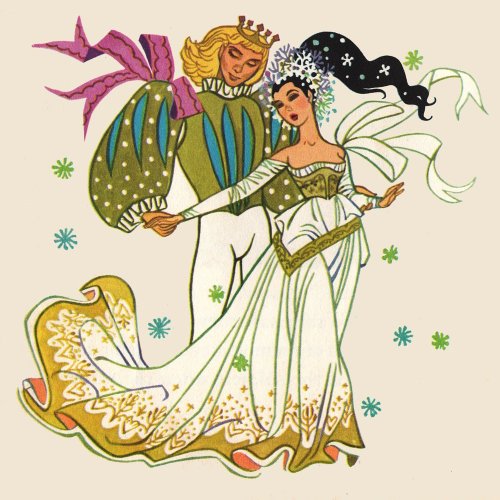
from Sleeping Beauty


Snow White and Rose Red


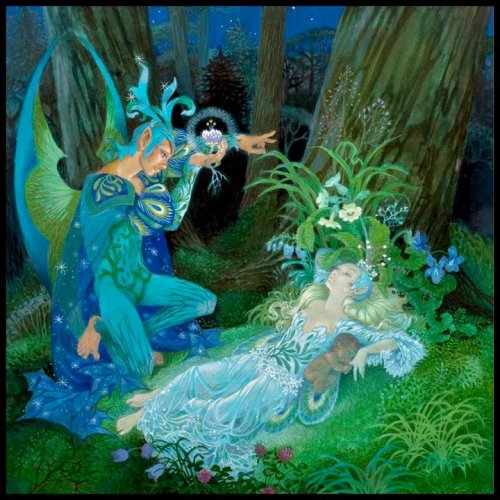
Titania and Oberon
Snow White and the Seven Dwarfs
Hansel and Gretel

Oh, wondrous internet, opening new worlds to me!  (And yet more and more ways for me to spend money I don't have.)

For more of my favorite childhood fairy tale artists, click the link.


And don't forget to tell your friends about our fairy tale writing contest.  I hope that even if you aren't a contest-type person that you will come back for the writing prompt exercises.

Tuesday, May 1, 2012

Fairy Tales Re-envisioned


Happy May Day!

Artist and photographer Viona Ielegems (not sure if that's her last name, as it is not capitalized on the website) casts a haunting, baroque gauze to these traditional fairy tales.

Little Red Riding Hood

Snow White


Sleeping Beauty


And some new ones.

Fallen for the Unicorn

She makes costumes and runs events.  See her website for more muse-inspiring pictures.

fleur2